Statistics & Research
Vaping Rates
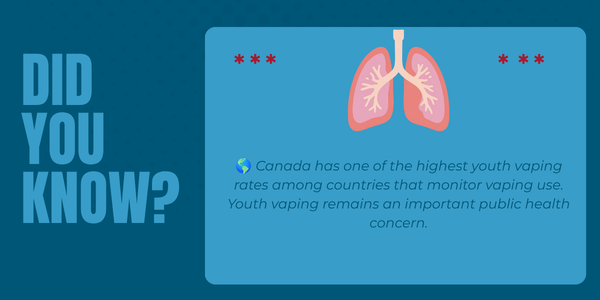
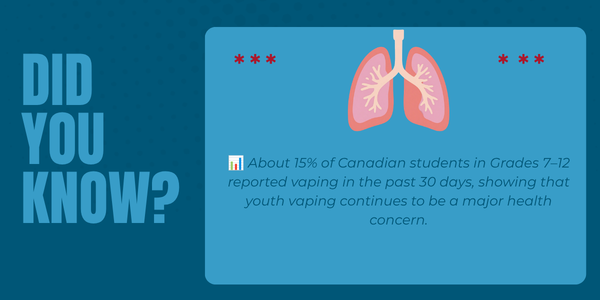
According to recent national health surveillance tracking, the age landscape of nicotine consumption has shifted distinctly across Canada.Vaping among teens (ages 12–17) has slowed down slightly in recent years, with about 7% reporting vaping in the past month. However, it remains high among young adults (ages 18–24), where nearly 1 in 5 (19%) vape regularly. In contrast, only about 4% to 5% of adults over 25 vape, mostly to help them quit smoking.
Local Context: Youth Vaping in Saskatchewan
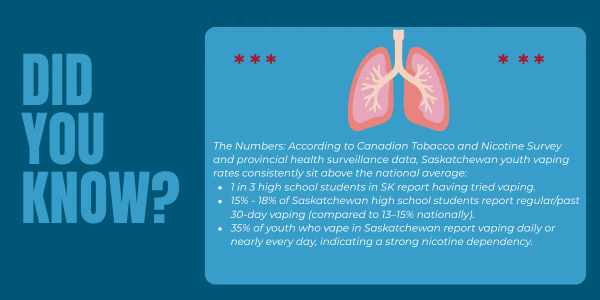
Youth vaping in Saskatchewan remains higher than the national average. About 1 in 3 high school students in the province have tried a vape, and 15% to 18% report vaping regularly. Additionally, over a third of SK youth who vape do so daily.
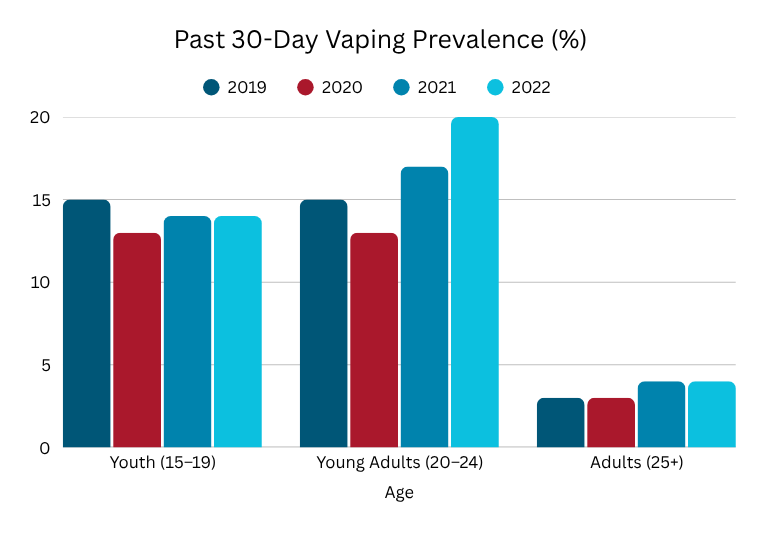
Figure: Past 30-Day Vaping Prevalence (%)
Reasons for Vaping
Youth Nicotine Initiation: The vast majority of school-aged youth who vape report never having regularly smoked a combustible cigarette. For youth, vaping is an initiator of nicotine dependency rather than a cessation tool. The primary self-reported drivers are stress/anxiety relief, social benchmarking, and sensory enjoyment.
Adult Harm Reduction: Conversely, adults over 25 predominantly report vaping to reduce, quit, or avoid returning to combustible tobacco.
Reasons for Vaping (all age groups), 2020
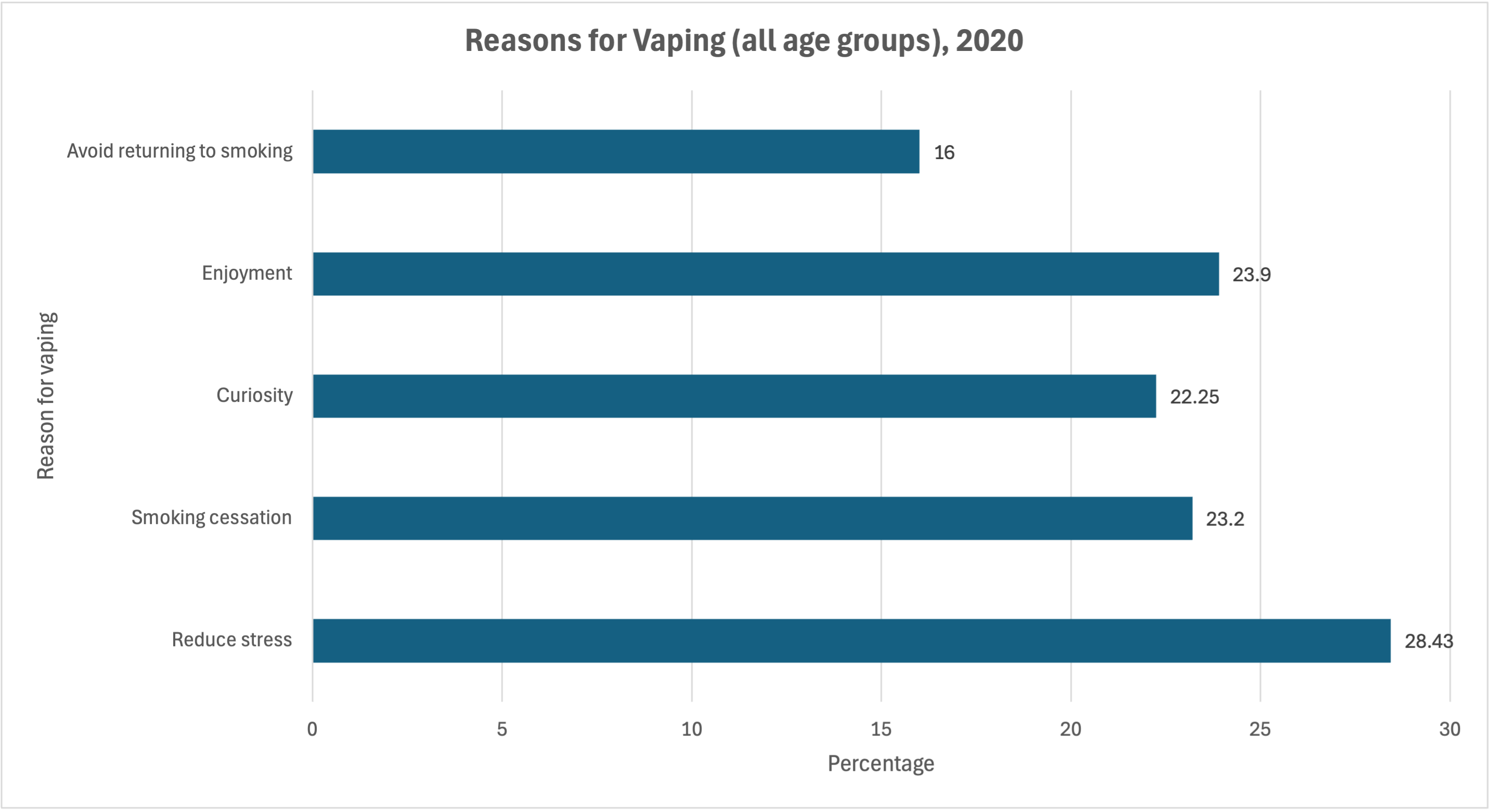
Understanding why Canadians choose to vape is essential to addressing public health concerns and supporting cessation efforts. Based on the 2022 Canadian Tobacco and Nicotine Survey (CTNS), motivations for vaping vary significantly by age. Among Canadians aged 15–24, the primary drivers for vaping are stress reduction, curiosity, and product enjoyment. For those aged 25 and older, the vast majority of users report vaping as a tool for smoking cessation or to avoid returning to cigarette use.
Research continues to highlight that fruit, mint, and menthol remain the most popular vaping flavours among Canadians. Because certain flavourings particularly fruit-based options are shown to have higher appeal among youth, the Government of Canada has implemented strict regulations on the promotion and marketing of these products to help reduce the risk of nicotine addiction among younger populations.
The Disposable Boom and Flavour Sourcing:
The commercial landscape has shifted almost entirely away from older refillable tanks or cartridge pods to high-capacity, pre-filled disposable vapes.
Despite federal and provincial regulatory crackdowns restricting youth-appealing flavor profiles (such as candy, fruit, and dessert):
-
Flavour Preference: Over 65% of youth continue to report using fruit or mint profiles.
-
The Sourcing Gap: While younger adolescents rely heavily on "social sources" (older friends, siblings, or buyers) to get their devices, older youth frequently exploit gaps in online age-verification systems or purchase directly from brick-and-mortar retail environments.
Flavours and Sourcing Mechanics:
Flavour chemistry remains a powerful driver of youth nicotine initiation. Despite provincial and federal crackdowns on youth-appealing marketing, 63% of students who vape report using a fruit flavour most often, followed by mint or menthol (11%).
The structural way youth acquire these devices has also adapted. While older adults and young adults overwhelmingly buy their products legally from commercial retail stores, underage youth rely heavily on commercial workarounds. Roughly 79% of students who vape obtain their devices and e-liquids exclusively through social sources, which includes purchasing or borrowing from older friends, siblings, and social networks.
The New Frontier: Explosive Rise of Nicotine Pouches:
The most significant and disruptive shift in the Canadian nicotine landscape is the sudden, exponential rise of oral nicotine pouches (tobacco-free modern oral nicotine products).
Longitudinal data from the Vaping Dependence Cohort tracked an unprecedented surge in adoption among young Canadians (ages 17–27):
-
Lifetime Trial: Skyrocketed from a baseline of 7.6% to 34.8%.
-
Current Monthly Use: Rose from just 1% to 8.5% of the youth/young adult demographic.
Public Health Implication:
Data shows that these small, spitless pouches are primarily being used recreationally rather than as cessation aids. There is a massive epidemiological overlap between vaping and pouch adoption: 97% of young people who use nicotine pouches are already actively vaping. Because these products are easily hidden, highly addictive, and aggressively marketed on social media, Health Canada enacted an emergency federal order moving nicotine pouches strictly behind pharmacy counters to prevent further youth uptake.
Quitting and Cessation Trends:
Nicotine dependence remains highly resistant to unassisted cessation. Because high-concentration nicotine salts deliver nicotine to the brain as rapidly as combustible tobacco, the dependency hooks users quickly and firmly.
Data indicates that over 50% of youth and young adults who vape daily have made at least one serious attempt to quit in the past 12 months. Barriers to successful cessation include severe nicotine withdrawal symptoms (irritability, anxiety, sleep disturbances) and deep environmental or social triggers within peer groups.
Saskatchewan Highlights:
-
Youth Vaping in SK: Youth vaping in Saskatchewan remains higher than the national average. Roughly 1 in 3 high school students in the province report trying a vape, and around 15% to 18% report vaping regularly.
-
Local Rules: In Saskatchewan, flavoured vapes are legally restricted to adult-only specialty vape stores to help reduce youth access.
Vaping to Quit Smoking
The Reality of "Dual Use" While some individuals use vaping to cut back on cigarettes, research shows that approximately 70% of those who vape also continue to smoke cigarettes: a behavior known as "dual use." Dual use is not considered an effective harm-reduction strategy, as it is associated with a higher risk of cardiovascular disease, obesity, and other negative health outcomes compared to exclusive use of either product.
Supporting Your Quit Journey Many Canadians who vape, particularly youth and young adults, report making active attempts to stop. If you or someone you know is looking for support to quit vaping, please visit our Quit Smoking Resources for guidance, tools, and professional support.
Note: This content uses the most recent comprehensive national data available from the 2022 Canadian Tobacco and Nicotine Survey (CTNS).