In 2014, Lung Saskatchewan began reviewing and searching out historical documentation to learn what role the Anti-Tuberculous League played in the history of Saskatchewan and the treatment of Indigenous people. We have renewed our commitment to continue our efforts through the Care and History of Indigenous Peoples project. This project is in part made possible by grants from Saskatchewan Health Research Foundation and Saskatchewan Culture. We do this work in collaboration with partners from the Office of the Treaty Commissioner, File Hills Qu’Appelle Tribal Council, the University of Saskatchewan, Provincial Archives of Saskatchewan, The National Centre for Truth and Reconciliation, as well as many other committed academics and volunteers.
At Lung Saskatchewan, we are committed to reaffirming our path to reconciliation. We wish to acknowledge our 112-year history in Saskatchewan and take action to improve our commitment to serve and work with Indigenous populations and organizations of Canada.
Lung Saskatchewan continues to review our programming, policies, and we are committed to reconciliation and equitable programming for Indigenous peoples. We seek knowledge and understanding of our role in Truth and Reconciliation.
We know there are people seeking historical information regarding their family member’s journey between a residential school, Indian Hospital and or a Saskatchewan Sanatorium. Lung Saskatchewan is working with our partners to consolidate and coordinate resources for individuals and families seeking information about their loved ones and their journeys.
Lung Saskatchewan extends sincere appreciation to Saskatchewan Council of Archives and Archivists and Sask Culture – Multi-Cultural Initiatives fund for their support of this project.
If you or a loved one are in need of support, the Hope for Wellness Helpline offers immediate help to all Indigenous people across Canada.
It is available 24 hours a day, 7 days a week to offer immediate support and crisis intervention.
Call the toll-free Helpline at 1-855-242-3310 or connect to the online chat at www.hopeforwellness.ca.
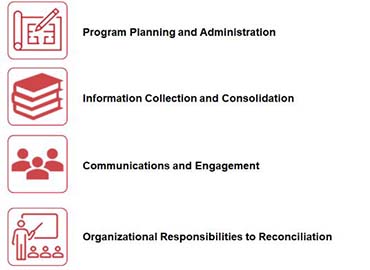
Project Plan:



A documentary by Incandescent Films about life at "Fort San", The Fort Qu-Appelle Sanatorium, during the tuberculosis epidemic in Saskatchewan in the early 20th century. Shared with permission.
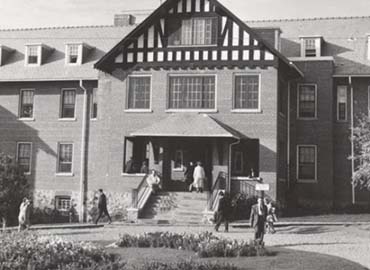
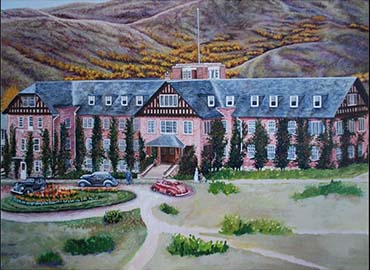
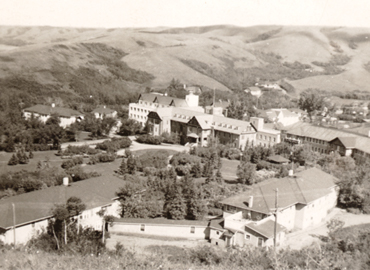
The "Great White Plague" was the name used to describe tuberculosis. To fight the highly contagious disease the Saskatchewan Anti-Tuberculosis League was formed in 1911. Under its auspices Fort Qu'Appelle Sanatorium, pictured, was opened in 1917 to provide rest and fresh air. But the cure was long and tedious; few could afford to remain until they were healed. So in 1929, through the League's urging, Saskatchewan was the first province to make the care and treatment of tuberculosis free of charge.
Dr. Ferguson, the medical director of the "San," had a strong commitment to fighting tuberculosis and tremendous compassion for TB patients. Doctors, nurses, and staff walked the extra mile to help the patients. The patients themselves cheered and nurtured those around them. A caring, loving atmosphere permeated the sanatoria. Bonds of friendship were formed which remained strong despite time and distance.
That powerful sense of each individual's worth continues to permeate the activities of Lung Saskatchewan. The Mission Statement reflects how Lung Saskatchewan has maintained the League's fervent belief in everyone's right to lung health. Each year it re-commits all staff and volunteers to the purpose.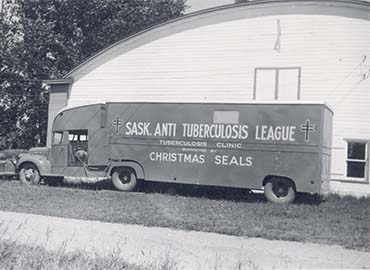
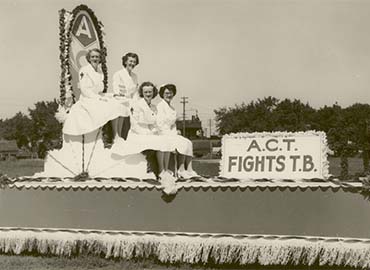
The Associated Canadian Travellers (ACT) Clubs across Saskatchewan have tirelessly supported lung health since 1934, contributing over $2.8 million to support the activities of Lung Saskatchewan in our province and helping Saskatchewan residents to breathe easier.
Early in our history when the TB epidemic was the silent killer in Saskatchewan and Canada, Lung Saskatchewan, then known as the Saskatchewan Anti-Tuberculosis League, toiled alongside service organizations to combat the white plague.
History of the Saskatchewan ACT
In 1929 The Saskatchewan Anti-Tuberculosis League made the decision to make the care and treatment of tuberculosis free of charge for our residents. The cure at that time, rest and fresh air in a sanatorium, was long and tedious and few could afford to remain until they were healed. That decision opened the door to fundraising opportunities, volunteerism, and community partnerships.
One such community partnership began in 1934 when the Associated Canadian Travellers clubs in Saskatchewan answered the call and adopted the Saskatchewan Anti-Tuberculosis League as their primary charity. Their fundraising events not only raised much needed funds to operate Saskatchewan’s three sanatoria for TB treatment but also raised awareness about TB prevention. They funded the large vans that were used to house mobile x-ray labs so that communities all across the province could be screened for TB. They also assisted in mobilizing community participation in the TB surveys. From 1938 to 1958 volunteers from the ACT Clubs staged the ACT Amateur Hour on radio stations in several cities and by 1960 the ACT clubs had contributed $1 million to the Saskatchewan Anti-Tuberculosis League.
When TB declined, the sanatoria began closing; however the ACT continued to support projects in lung health. From 1988 to 2007 the ACT funded and volunteered at the ACT Wilf Churchman Discovery Asthma Camp. They underwent an organizational change in 1996 when they merged with the United Commercial Travelers (UCT) to become the ACT/UCT. They continue to have a very strong affinity for Lung Saskatchewan and have continued to provide their support to the present day. It has been 83 years since the Travellers have been involved with improving lung health one breath at a time in Saskatchewan and their monetary generosity alone has exceeded $2.7 million in contributions.
During their zenith, seven ACT Clubs were scattered across Saskatchewan in Moose Jaw, North Battleford, Prince Albert, Regina, Saskatoon, Swift Current, and Yorkton. In recent years, due to declining membership the Regina, Yorkton, and Prince Albert clubs have closed. Please consider investing in your community by joining your local ACT/UCT club and become part of this tremendous giving legacy.
Lung Saskatchewan joins the residents of our province in a lung-felt thank-you to the ACT and ACT/UCT members past and present for serving our residents so well.
ACT/UCT Photo Album
Do you have any pictures you'd like to add to this album? Please send these to info@lungsask.ca.
History of the Asthma Camps run by the Saskatchewan Lung Association and the Saskatchewan ATC/UCT clubs between 1988 and 2007.