Statistics & Research
Smoking Rates
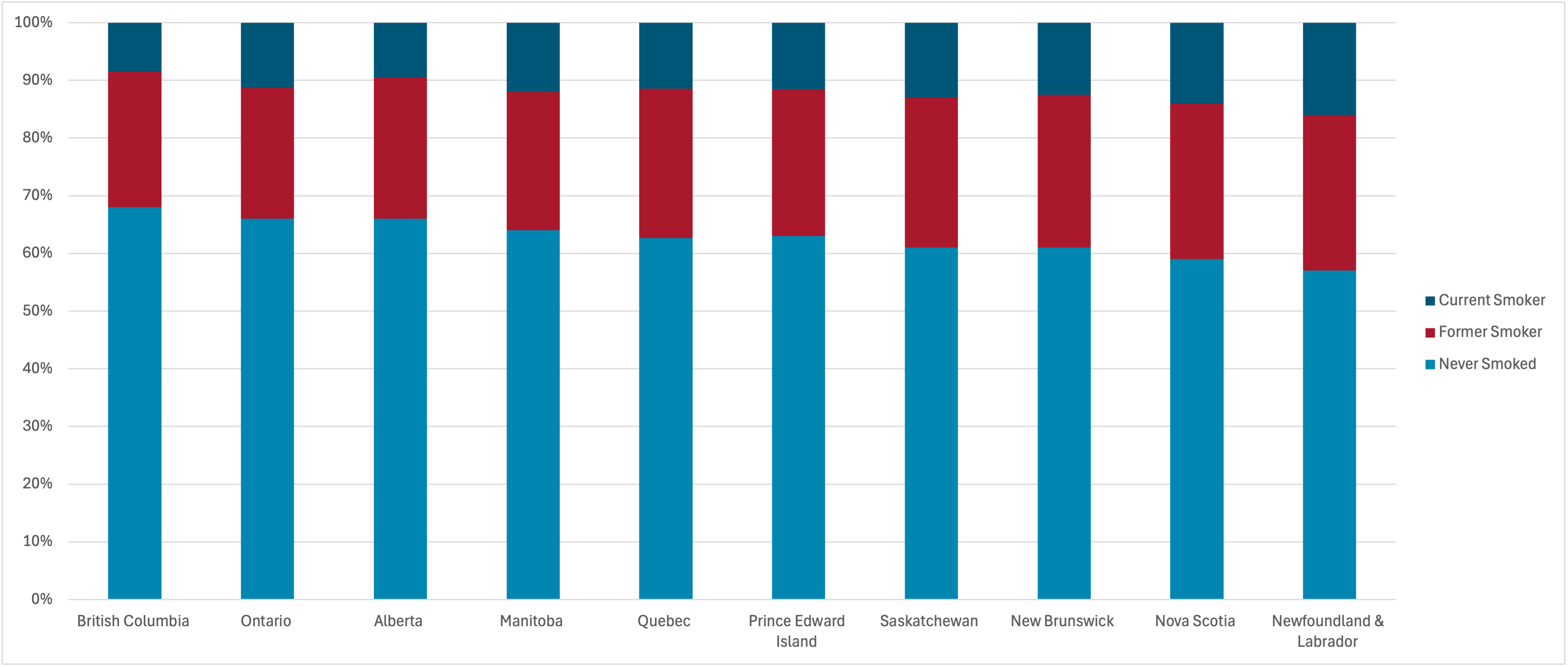
About 1 in 9 Canadian adults (11%) surveyed in 2024 reported currently smoking cigarettes. Youth had the lowest rates of cigarette smoking, dropping to a record low of less than 2%, while older adults maintained the highest rates. A higher percentage of men compared to women reported currently smoking. Regionally, smoking rates remain highest in the Territories and parts of Atlantic Canada (such as Newfoundland and Labrador), while British Columbia and Alberta continue to track among the lowest provincial rates.
Smoking Status, by Province, 2024
Tobacco Use Rates
In Saskatchewan, the adult smoking rate remains higher than the Canadian average (~11%), with roughly 14% to 15% of Saskatchewan adults reporting regular cigarette use. Rates are especially high among young adults aged 20–24. Saskatchewan consistently reports some of the highest provincial smoking and commercial tobacco use rates in Canada.
In 2024, an estimated 13% of Canadians used at least one tobacco product in the past 30 days, down from 29% in 2001. Approximately 11% of adult Canadians reported currently smoking. Among younger Canadians, 6% of youth aged 15–19 and 13% of young adults aged 20–24 reported past-30-day tobacco product use (2020, the most recent age-disaggregated data available). Use of other tobacco products has also declined: as of 2022, less than 1% of Canadians aged 15 or older reported past-30-day use of a water-pipe or chewing tobacco. Saskatchewan continues to have one of the highest provincial smoking rates in Canada, while British Columbia and Alberta remain among the lowest.
The Flavour Trap and Cigarette risk
Flavours attract youth to nicotine products. Across Canada, 92% of youth who vape started with a flavoured product. High nicotine levels in flavoured vapes quickly cause addiction, making youth significantly more likely to experiment with regular tobacco cigarettes or use both at the same time.
The Rise of Oral Nicotine Pouches
Nicotine pouches (like Zonnic) are small, smokeless pouches placed under the lip. They are becoming popular among youth who have never smoked. Because they contain high levels of nicotine, they create a strong chemical dependency that can lead to commercial tobacco use.
👉 Want more details on e-cigarettes and device trends? Visit our dedicated Vaping Statistics & Research page.
Quitting Smoking
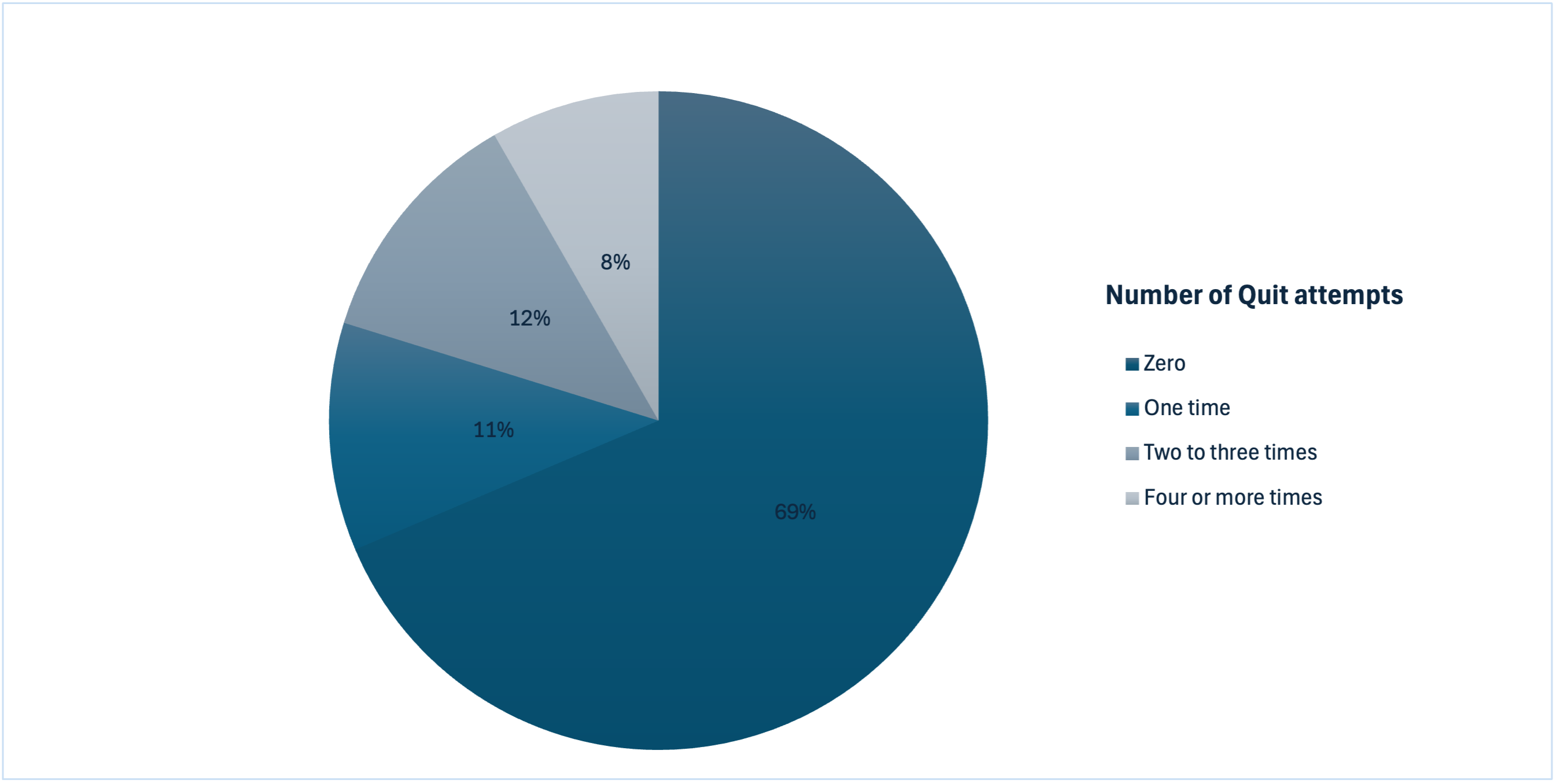
In 2022, approximately 23% of Canadians aged 15 or older reported being former smokers who had successfully quit. Among those who had quit or made a quit attempt within the last year, the most common approaches were quitting on their own without special preparation (62%), reducing the number of cigarettes smoked (40%), switching to vaping (28%), and using nicotine replacement products (26%). Among daily smokers, 31% had made at least one quit attempt lasting 24 hours in the past year a decrease from 39% reported in 2020.
Number of Quit Attempts by Those Who Smoke Daily