
Zenhale® inhaler
This product is manufactured by Organon Canada Inc. and is a combination of two ingredients, formoterol fumarate and mometasone furoate.
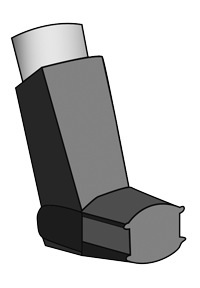
This product is taken via MDI (metered dose inhaler).
play
MDI (metered dose inhaler)
Why is it prescribed?
- Zenhale® is indicated for asthma that is not controlled with a controller medication (e.g., low to medium-dose inhaled corticosteroid) plus an as-needed short-acting beta2-agonist (e.g., salbutamol).
- It is also indicated for asthma severe enough to require initiation of two controller therapies.
- Zenhale® is not a rescue medication. Your doctor should prescribe a rescue medication for you. Use the rescue medication if you have sudden asthma symptoms.
- Zenhale® is for patients with asthma that:
- was not well controlled with other asthma controlling medications or
- is severe enough that the doctor recommends starting asthma treatment with two asthma medications
How to use:
- Remove the cap from the mouthpiece of the actuator.
- Check the mouthpiece for foreign objects and make sure the canister is fully inserted into the actuator.
- Hold the canister upright between your thumb and forefinger and shake the inhaler.
- Breathe out fully through your mouth as far as is comfortable, expelling as much air from your lungs as possible. Hold the inhaler in the upright position and place the mouthpiece into your mouth. Close your lips around the mouthpiece.
- While breathing in deeply and slowly through your mouth, press down firmly and fully on the canister top until it stops moving in the actuator. Take your finger off the canister.
- When you have finished breathing in, hold your breath for up to 10 seconds, or for as long as is comfortable. Then remove the inhaler from your mouth and breathe out through your nose while keeping your lips closed.
- For administration of a second puff, wait about 30 seconds. Shake the inhaler well and repeat steps 4 through 6.
- Immediately after use, firmly replace the cap. Do not use excessive force.
- After completing both inhalations, rinse your mouth thoroughly with water and spit out the contents. Do not swallow the water after rinsing.
The inhaler has a dose counter to count down the number of inhalations remaining.
Store at room temperature (15°-30°C). Do not freeze.
Alternatives
See other products used in the treatment of •bronchospasm associated with COPD •chronic bronchitis (COPD) •COPD •emphysema (COPD) •asthma •allergic rhinitis •hay fever •nasal polyps •perennial rhinitis •rhinitis •seasonal allergies •seasonal rhinitis •year-round allergies •sleep apnea •
Zenhale® is available in two strengths: 100 mcg/5 mcg and 200 mcg/5 mcg; delivering 100 mcg and 200 mcg of mometasone furoate (MF), respectively, and 5 mcg of formoterol fumarate dihydrate (F) per actuation.
Recommended dose for Zenhale® treatment based on prior asthma therapy in those 12 years and older:
- Previously using medium dose glucocorticosteroids: Zenhale® 100 mcg/5 mcg, 2 inhalations twice daily
- Previously using high dose glucocorticosteroids: Zenhale® 200 mcg/5 mcg, 2 inhalations twice daily
Mometasone, an anti-inflammatory corticosteroid, and formoterol, a long-acting beta2-agonist, help prevent asthma symptoms by preventing inflammation and bronchoconstriction.
Along with its desired effect, Zenhale® may have some unwanted effects. The most common of these include:
- headache
- sore throat
- hoarseness
- sinusitis
- dry mouth
- nausea
- tremor
- shakiness
- nervousness
- dizziness
- disturbed sleep
- muscle cramps
- As with all long-acting beta2-agonists and beta2-agonist/corticosteroid combinations, Zenhale® carries a warning that long-acting beta2-agonists have been associated with asthma death. These warnings are based on a U.S. study using salmeterol.
- Extra monitoring may be required in patients switching from oral corticosteroids (eg. prednisone tablets) to Zenhale®.
- Inhaled corticosteroids should be tapered rather than discontinued suddenly due to risk of worsening asthma.
Use with caution if you have:
- diabetes
- high blood pressure
- ever had a heart problem, such as rapid or irregular heart beat or abnormal electrical signal called “prolongation of the QT interval”
- liver disease or cirrhosis
- problems with your thyroid or adrenal glands
- low levels of potassium in your blood
- tuberculosis (or ever had)
- a fungal infection (thrush) in your mouth or throat
- have eye disorders such as glaucoma or cataracts - people who are at risk of glaucoma and cataracts may need to be monitored more closely
Drug Interactions - Talk to your pharmacist or doctor if you are on the following:
- beta-blockers (e.g., propranolol, metoprolol)
- water pills
- medicines for a fast or uneven heartbeat
- tricyclic antidepressants or MAOIs
- other medicines containing a long-acting beta-agonist
- terfenadine or astemizole
Use in pregnancy and breastfeeding: Human data is limited. Consult your pharmacist or doctor before use.