TB is still widely misunderstood, both in terms of its impact on affected populations and the disease itself.
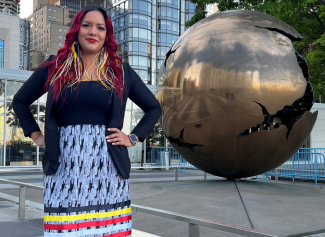
I was diagnosed with TB infection after undergoing an occupational health screening required for my nursing school clinical placements. Receiving a TB diagnosis was frightening, since, like many people, I wasn’t aware that TB was still a concern. I was upset and scared about what this meant for my health and my future. However, my care providers were empathetic, compassionate, patient, and highly knowledgeable about the disease. They took the time to thoroughly educate me and offered a range of follow-up options. After careful consideration, I chose to treat my latent TB infection to reduce the risk of developing active TB in the future.
I worked as a summer student delivering the Directly Observed Therapy (DOT) program, where trained healthcare providers administered treatment and supported patients and families throughout their care, offering a direct link to those affected by TB. I started working at this clinic at the same time I was receiving treatment for latent TB. At that time, treatment involved taking 78 doses, twice a week, for about nine months. Through this experience, I gained first-hand insight into how disruptive, exhausting, and frustrating it can be to coordinate a nine-month treatment regimen while trying to maintain a normal life.
Addressing Misunderstandings About TB
TB is still widely misunderstood, both in terms of its impact on affected populations and the disease itself. With 14 years of experience in public health focused on TB care across different regions of Canada, I’ve found that we face similar challenges in our efforts to eliminate TB. One of the most critical steps in addressing these challenges is tackling the stigma surrounding TB, and those affected by it. A key action would be to prioritize community-level education and awareness about TB. Additionally, the Canadian government has committed to reconciliation, with specific calls to action for health, which must include addressing TB in Indigenous communities. As an Indigenous nurse providing care to these communities, I advocate for all healthcare providers to develop a deeper understanding of TB. I believe that by fostering open dialogue about the disease and working collaboratively, we can create tailored, culturally appropriate plans to meet the unique needs of each community based on their culture and location.
Barriers to TB Prevention
The historical treatment of Indigenous peoples in Canada, particularly in relation to TB, has contributed significantly to stigma and mistrust surrounding the disease. Indigenous peoples were often subjected to discriminatory practices in TB sanatoriums, where they faced segregation, mistreatment, and a lack of cultural sensitivity. This legacy of trauma has led to a deep mistrust of healthcare systems, which continues to affect their willingness to seek care for TB today.
The stigma surrounding TB, compounded by historical injustices, discourages individuals from getting tested or seeking treatment, fearing discrimination or negative judgment. This mistrust also hinders effective communication and education about TB prevention and treatment, creating barriers to care. As a result, efforts to eliminate TB in Indigenous communities are undermined, as the disease remains underreported and undiagnosed due to fear and stigma.
TB Prevention and Treatment in Saskatchewan and Beyond
As an Indigenous healthcare provider in Canada, there is much to be hopeful about when it comes to advancements in TB care and treatment, especially considering the disproportionate impact TB has had on Indigenous communities. Historically, TB has had devastating effects on Indigenous populations, rooted in colonialism, social determinants of health, and limited access to healthcare. However, recent progress is making a difference in both the treatment and prevention of TB in Indigenous communities, and this offers hope for a healthier future.
Some things I look forward to for TB prevention and treatment include — but are not limited to — improved diagnostics and access to testing, tailored treatment regimens and shorter treatment durations, culturally relevant and community-based approaches, better public health infrastructure and collaboration, and strengthening the role of Indigenous healthcare providers.
Breaking the Stigma: TB Education and Awareness
- Correcting Misunderstandings: By providing accurate information about how TB is transmitted, treated, and prevented, education can dispel common myths and misconceptions, such as the idea that TB is always fatal or highly contagious through casual contact. This helps reduce fear and misinformation that often fuel stigma.
- Highlighting TB as a Treatable Disease: Educating the public about the effectiveness of modern TB treatment and the fact that people with latent TB are not contagious can help shift the narrative from one of shame and fear to one of hope and recovery. Including the knowledge that TB can be treated in your community, and most often in the comfort of your own home may encourage engagement.
- Addressing Historical Trauma: Education about the historical mistreatment of Indigenous peoples and their experiences with TB care in past decades can foster understanding and empathy, while acknowledging the roots of mistrust in healthcare systems.
- Promoting Cultural Competency: Awareness training for healthcare providers can lead to more culturally sensitive care, reducing instances of discrimination or misunderstanding that may arise when Indigenous peoples seek TB treatment. This can help rebuild trust in health services.
Overall, education can shift attitudes from fear and shame to understanding and support, which is essential for both reducing stigma and improving TB elimination efforts.
Outlook for the Future
While there is still much work to be done, these advancements in TB care—ranging from new diagnostic tools and treatments to culturally tailored care and stronger community-based interventions—offer hope for a future where TB is no longer a significant health burden for communities in Canada. The active involvement of Indigenous healthcare providers and the inclusion of Indigenous perspectives in healthcare planning and research are key to making these advancements sustainable and truly effective for those who need it most.
Thank you for supporting lung health in Saskatchewan.
Yours sincerely,
Tina Campbell
Did you know many people believe that TB is no longer a significant health threat, assuming it was eradicated or is only found in history books? In reality, TB is still a major global health issue, with millions of new cases each year.
Learn more: Common misconceptions about TB.