I had no idea what COPD was, or how it would change my life.
How It Started
I grew up south of Oxbow by the river with my six older brothers. I am married to an extremely supportive man, Art, and we have two children and two grandsons. We moved away from Oxbow for some time, but then returned and have lived here for about 39 years. Before my diagnosis, Art and I were busy travelling and doing what we enjoyed.
In January 2023, we were in Regina at a Pats game to see Connor Bedard play before he went to the NHL. After the game, I didn’t feel well, I was coughing and “feeling off”, like I had a cold. The next morning, I was worse, with fever, headache, and a bad cough. We drove straight home, and I went to bed. Later that evening, I had to go to the emergency room. The nurses tested me for COVID, which was negative. My oxygen levels had dropped to 84, and I was struggling to breathe.
The doctor did some investigations and admitted me for the night. He told me he thought I had COPD. I said, “OK, give me my prescription, and I’ll head home.” Then he sat beside my bed and explained exactly what I had. COPD means chronic obstructive pulmonary disease. It causes the lungs to become swollen and partly blocked. COPD gets worse over time, and while it cannot be cured, it can be treated and managed. I was very upset, mad at myself and scared for the future. I had no idea what COPD was or what type I had at the time. After several appointments with my family doctor, I felt a little better and much more informed. He explained that I had emphysema and told me what I needed to do to help myself. He has been my lifeline.
Life Changes After Diagnosis
By December, I had to quit my job. I was so exhausted every single day. I would come home from work and fall asleep in my chair before I even ate. I would rest on the weekend, start to feel a bit better, and then the cycle would start all over again. I could barely function. I was mentally and emotionally drained. My doctor told me to quit work, and I did. Then came the anxiety of not working. I had worked my whole life, and now I couldn’t. What do I do? That was a huge change.
I don’t go out in crowds anymore unless it’s really important, and I often wear a mask. My husband does the grocery shopping, and I mostly stay home, especially during flu season. We both get every vaccine that we can. We wash our hands every time we come back into our house from somewhere, and we let people know not to come to our home if they are feeling unwell. At first, it seemed like a lot, but now it’s just how we live. I have had three flare-ups since my diagnosis. Two of them happened during separate holidays we took. Travelling is more difficult for me now; it takes a toll. If I stick to my routine, I can manage pretty well, but if I add a holiday, it takes a while to recover. I’m just not willing to give that up yet, I’ll keep doing my best to protect myself while I’m still able to travel.
Finding Support
I first heard about Lung Saskatchewan when I had an overnight oxygen test and spoke to the nurse who read my results. She explained the results and introduced me to Lung Saskatchewan and their COPD Community of Support on Facebook. I joined the group right away and found it very helpful. Living in the countryside, you don’t have access to the same resources as the city, so I’ve relied on the COPD Community for support and information. I appreciate the help with no judgment. I’ve watched many of the webinars Lung Saskatchewan offers and learned a lot from them.
Letting Go of Self-Blame
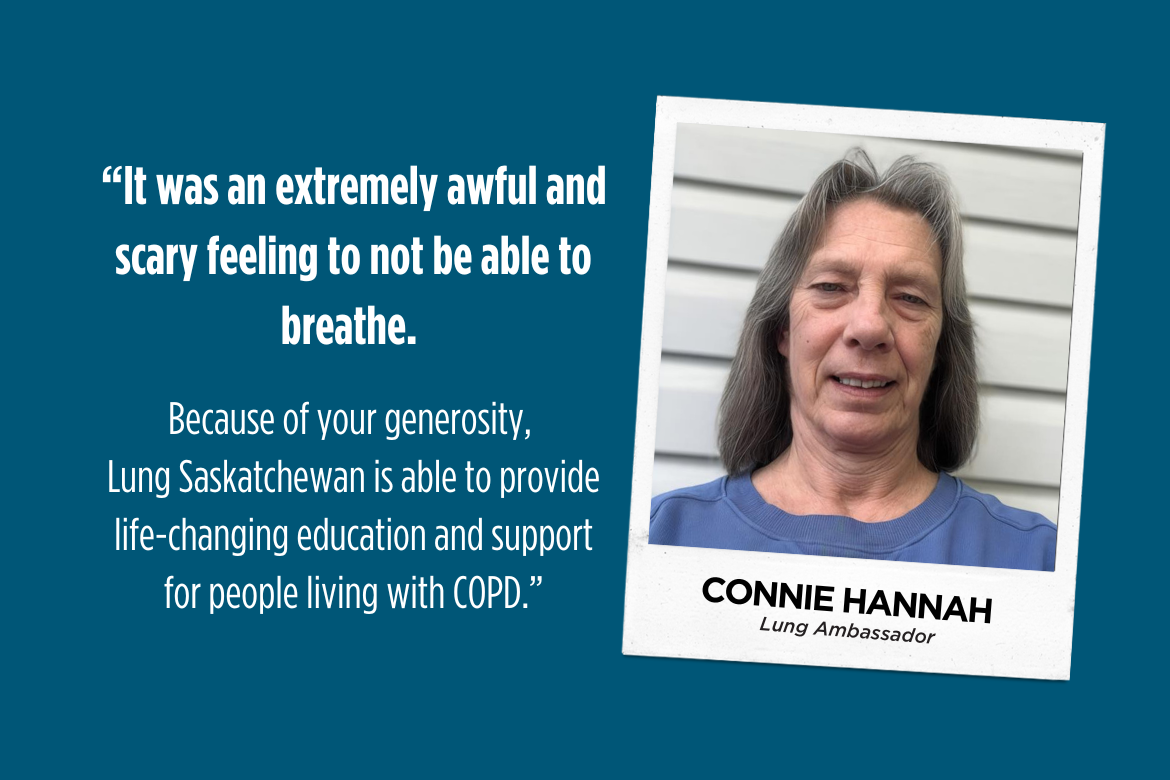
What I want others to know is that a lung disease can happen to anyone, and it is not fun. I smoked for 40 years, and I know that caused this damage. I remember when commercials on television had doctors telling me which brand of cigarette was the best. So yes, I smoked and damaged my lungs, but I didn’t understand the consequences. I will not accept self-blame any longer. I quit smoking the week after my diagnosis. It was an extremely awful and scary feeling to not be able to breathe.
Staying Strong
So onward and upward, I do everything I can to stay healthy. I walk on the treadmill for 30 minutes most days. I cover my mouth when I go out in the winter to protect my breathing. We purchased an air cleaner and keep the windows closed. I avoid the outdoors if it’s smoky, I avoid sick people, and I get my vaccinations every year. I try to eat healthy and drink plenty of water—half my body weight in ounces daily. When my body says it’s tired, I rest. COPD is unpredictable, and I never know for sure how I will feel from one day to the next. But there are worse things, and I feel pretty lucky to have support and the chance to do things that will keep this disease managed. Some people have illnesses where there is nothing they can do to change how they feel. With COPD, I can do a lot to improve how I feel and slow its progression.
Thank you for supporting lung health in Saskatchewan.
Yours sincerely,
Connie Hannah